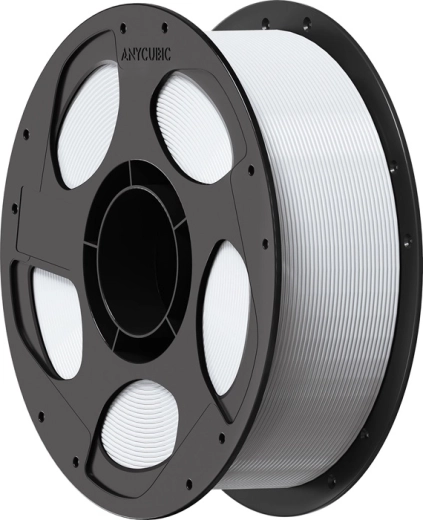
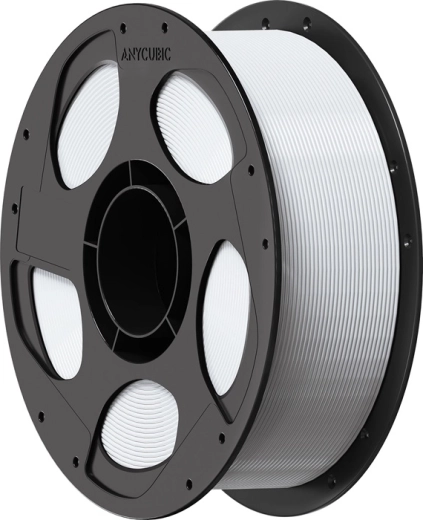
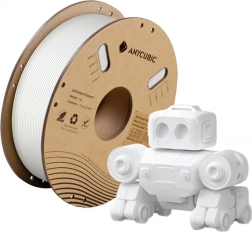
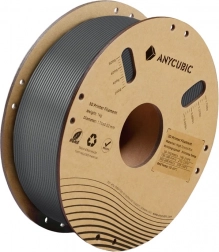
Anycubic PC filament is ideal for technical 3D prints where you need high impact resistance, thermal stability and weather resistance. It also offers a semi-transparent, smooth surface and, when used with Anycubic ACE Pro, makes work easier thanks to an identification chip for automatic recognition of parameters.
Anycubic PC (polycarbonate) filament is designed for demanding applications—from functional parts for robots and drones to components for outdoor use. Thanks to its high impact resistance and stability at higher temperatures, it helps minimize the risk of warping and cracking even under long-term load.
The material is also resistant to UV radiation and weathering, so prints have a longer service life and do not degrade as quickly. The semi-transparent effect and smoother surface make it a great choice for design projects as well, such as lamp shades or decorative components.
Main benefits:
- High impact strength for durable functional parts
- Heat resistance and stability for demanding operating conditions
- UV and weather resistance for outdoor use
- Semi-transparent look and smooth surface for aesthetic prints
- Identification chip for automatic setting recognition (with Anycubic ACE Pro)
- Reusable spool with a threaded system for more convenient handling
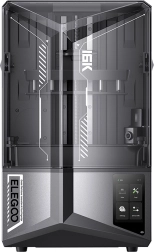
Printing recommendation: for best results, print in an enclosed chamber and dry the filament before printing.
Specifications
- Manufacturer
- Anycubic
- Color
- white
- Filament material
- PC
- Weight
- 1 kg
- Density
- 1.2 g/cm³
- Melt flow rate
- 15–20 g/10 min (270 °C/2.16 kg)
- Melting temperature
- 230 °C
- Material stability
- up to 122 °C
- Heat deflection resistance (0.45 MPa)
- 110 °C
- Water absorption
- 0.25 %
- Material stiffness
- 2550 ± 100 MPa
- Tensile strength
- 65 ± 6 MPa
- Tensile strength (Z axis)
- 25 ± 7 MPa
- Elongation at break
- 9 ± 4 %
- Elastic modulus
- 2900 ± 150 MPa
- Flexural strength
- 105 ± 10 MPa
- Impact resistance (X-Y)
- 30 ± 12 kJ/m²
- Printing conditions
- Enclosed chamber, drying required
- Drying temperature
- 80 °C, 6–8 h
- Nozzle temperature
- 270–290 °C
- Build plate temperature
- 100–120 °C
- Print speed
- 40–250 mm/s
- Maximum volumetric flow
- 12 mm³/s
- Minimum nozzle diameter
- 0.2 mm